










Superheroes have been around for a long time, almost always being portrayed as a shining light of hope and inspiration. In the 1930’s and 40’s superheroes like Superman and Captain America gave readers a sense of optimism during the times of the Great Depression and World War Two. Since then, both of these heroes have been sharing their messages of freedom in comics, movies, and TV shows.
The first Superman comic was released in 1938. He was known at that time for supporting “Truth, Justice, and the American Way,” spreading more American support propaganda with these heroes.
Later on, these heroes changed their ways. In 2006, Captain America, previously a role model for all Americans, now becomes a rebellious leader, facing off against a nationalist US government.
Superman made changes as well, changing his iconic slogan to “Truth, Justice, and a Better Tomorrow” in 2021 to show that he’s a hero for the world and not just America. On July 11, 2025, the DC film “Superman” was released to the public, and brought a new resurgence to the character. The new film let viewers see Superman’s original intention.
Superman was created by Jerry Siegel and Joe Shuster, both were sons of Jewish immigrant parents who faced persecution in their lives. The caped superhero was created to look like the average Jewish man and gave inspiration for any Jewish reader. In 1942, “Superman No. 17” was released with a cover of Superman standing on top of the Earth, holding Adolf Hitler and Japanese Emperor Hirohito by their scruffs, humiliating them both. Superman gave a feeling of safety and strength back to the Jewish immigrants that were discriminated against and forced to leave their homes.
Avid superhero fan and English teacher at Technology High School, Joe Myers, when asked about Superman and his values said, “He represented American values and stuff. So I think it’s a double edged sword, right? People look up to him because he represents American values. But again, all of his core values come back to being a good human being.”
As a child, Myers watched “X-Men: The Animated Series” every Saturday, to see his favorite hero, Storm. The female superhero, who controls the weather, served as a role model as well as a comfort to young Myers. “I didn’t feel like I could control my environment or had any power when I was a kid. So I think that’s something I wanted to aspire to.” Myers wanted to build confidence like Storm; she would fly in, lead the team, and save the day!
Superheroes also play a role in helping people through their personal struggles, whether they be social or internal; “… She was claustrophobic. I remember that, from the stories. And I think I had some claustrophobia growing up, too. And I wonder, you know, if she helped me deal with that.” adds Myers.
Many people gained comfort from the X-Men as they were discriminated against in the same ways that many are today. As they faced society’s hatred for the mutant race that they belonged to, and they constantly faced their own personal challenges as well.
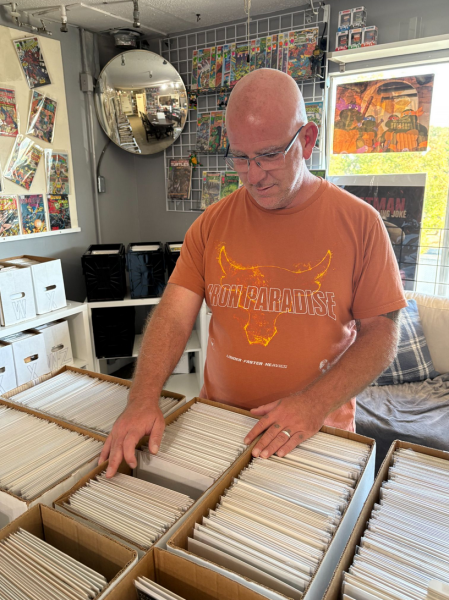
Harvey Doss, owner of “Harvey Doss Comics and Collectibles” in Rohnert Park, has been heavily impacted by superheroes his whole life. “I own a comic book store… It impacts me daily, whether it be looking at absolutely cool art that I’ve never seen before. Reading a story, or it’s sending my daughter to UC San Diego. I mean, how does it impact? It’s kind of hard to pull that apart anymore these days because I’m not able to enjoy it like I used to. It’s more of a job now, it used to be more of reading them, you know, now it’s more of selling them.”
(Photo by Nikolas Khoury).
Back in his childhood Doss was connecting with the heroes in his comic books. “To be honest with you, I’d probably say more like Kick-Ass. It’s an offbeat title, but someone that was picked on when they were younger, right? Yeah. I related to that when I was really young, that was actually part of my childhood. So I actually can have part of my life, be, what was in a comic book, and then he’s totally human.”
The humanity of these heroes brings them to life and continues to keep them alive. Every person can connect to the money and social problems that Spider-Man faces, or the mental illness and rage issues of Bruce Banner and the Hulk.
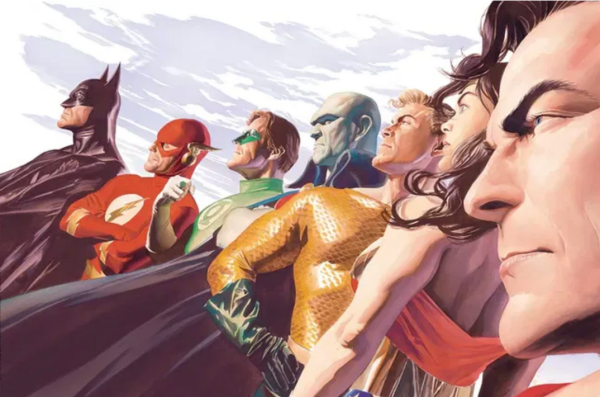
Many heroes that are human without powers such as Batman, Iron Man, Nightwing, or Kick-Ass are seen as more relatable heroes. Doss says “So there’s more of a relation to someone that’s not like from Krypton. This guy’s from Earth, he’s human, right?”
Those heroes by just being human beings inspire so many people to be like them. Myers added “They don’t have like Supernatural abilities. I think it gives people sort of a confidence build that says, hey, just because I don’t have the most potential and God given qualities. That doesn’t mean I can’t do something with myself.”
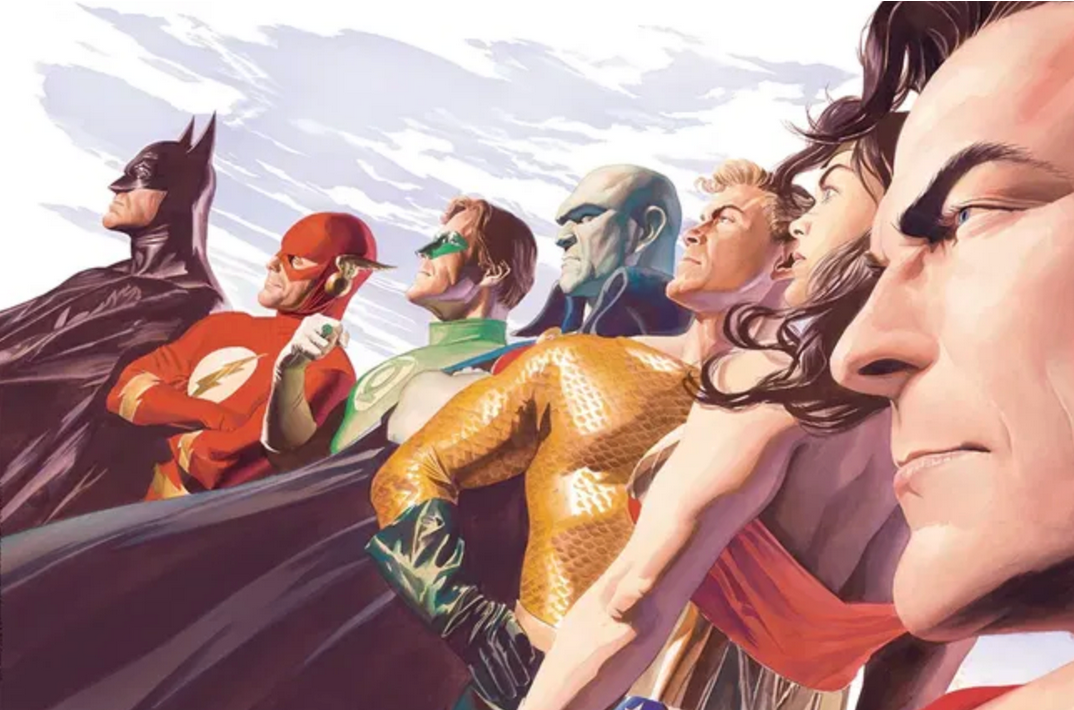
(Photo by Alex Ross)
Superhero culture has constantly been growing since its creation, with the addition of heroes of different cultures and genders helping grow a much larger audience. Myers says “I’m going back to Storm, I think she came out in the 1960s. She’s the first black female superhero. And that was, again, incorporating more people, being more inclusive in comic book culture. And I think as they adapt and they include more characters, they’re going to find a bigger audience and it’s going to keep just going from there.” The additions of more heroes of different cultures makes it much easier for people to relate to and enjoy their favorite heroes. Just as Captain America helped American troops through World War Two, the X-Men and other modern heroes are helping everyday people through battles of racism, sexism and injustice. All that the world can do is fight the good fight, just like our heroes do.